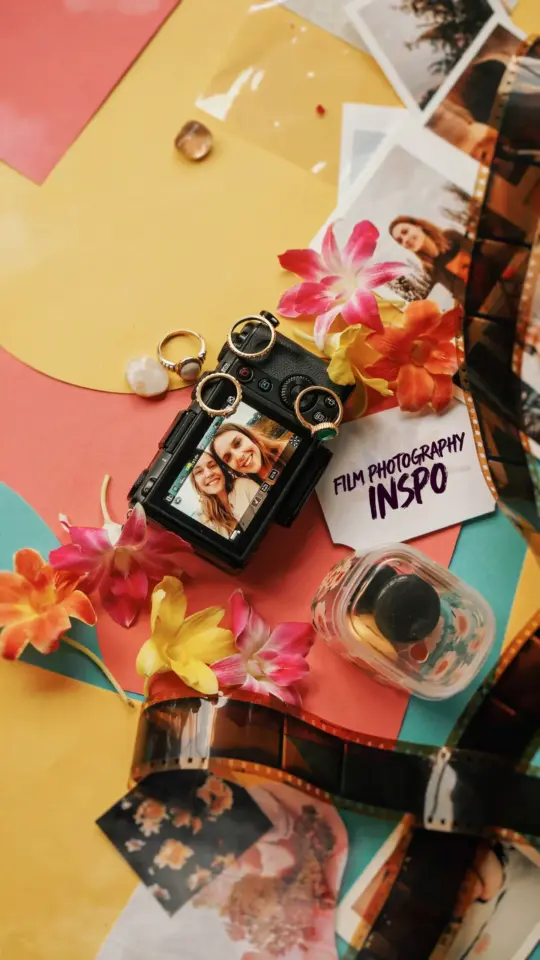
Sometimes you just need a fresh jolt of film photography inspo to break out of a creative rut. Whether you shoot 35mm or medium format, the magic of analog is how a single roll can feel like a new adventure. I've been through dozens of rolls over the years, and the best shots always came from trying something I hadn't done before. Below are six distinct themes to try on your next roll, with practical tips for both 35mm and medium format shooters.
Double Exposures Done Differently: Layering Without Overthinking
Double exposures can feel intimidating, but they don't need a complex setup. Load a roll of 35mm (I like Ilford HP5 for its forgiving latitude) and shoot your first pass with high-contrast subjects like bare branches or silhouettes. Keep notes on which frame you exposed. Then, rewind the roll, pop it back in, and shoot a second pass with softer elements like flowers or a blurry skyline.
For medium format, try this with a Hasselblad or a Bronica that has a double-exposure lever. It gives you more control. A trick: underexpose both passes by one stop so the final image doesn't wash out. The best part is the happy accidents, so don't stress about perfect alignment. Let the layers merge into something unpredictable.
Natural Light Portraits with a Medium Format Twist
Medium format is a portrait beast because of that shallow depth of field. But you don't need a studio strobe. Find open shade on a bright day, maybe under a tree or against a north-facing wall. The soft, even light flatters any face. I use a Mamiya RZ67 with 110mm f/2.8 lens. Set your aperture to f/4 and focus on the eyes. The fall-off in sharpness from background to subject is what gives that timeless look.
For 35mm, grab a 50mm or 85mm lens and push your film speed one stop. Overdevelop by 20% to pop the grain, which adds texture to the portrait. Keep your subject close to the light source but not directly in it. A white reflector (or even a piece of foam core) on the shadow side fills in the face without killing the contrast.
Composition Tricks That Make Your 35mm Frames Pop
You can shoot 35mm cheaply, so experiment with framing. Use a wide-angle lens like a 28mm and get physically low. Place a leading line like a road or a fence diagonal across the frame. This creates depth even with a flat film stock. I try to leave negative space in the upper third of the frame, then crop a little in the darkroom later to tighten the composition.
Another trick: shoot through something. A dirty window, a chain-link fence, or even a glass bottle held in front of the lens. The out-of-focus foreground adds a painterly blur. It works best with a fast shutter speed and aperture wide open, like f/1.8. The imperfections become part of the aesthetic, reminding you why film feels alive.
Abstract and Textural Projects for Darkroom Fun
These ideas are perfect if you have access to a darkroom. Try photograms: lay out objects (keys, leaves, lace) directly on photo paper and expose it for a few seconds under the enlarger. Develop normally. You get crisp white outlines on a black background. For a softer look, use semi-matte paper and flash the paper briefly with a handheld light before placing objects.
- Film soup: Before you develop the roll, soak it in orange juice, coffee, or vinegar for a few hours. Rinse carefully, then develop as usual. Colors shift unpredictably. Try this with C41 color negative film for wild results.
- Cross-processing: Develop slide film (like Ektachrome) in C41 chemicals. You get intense, unnatural hues with high contrast. Medium format slide film cross-processed yields huge, grainy color shifts that look like 1980s album covers.
- Pushing and pulling: Shoot a roll of Tri-X at ISO 800 instead of 400. Develop it for 50% longer. The grain becomes chunky and the shadows go deep black. Great for moody street photography.
Medium Format Landscape Ideas for Slow, Intentional Shooting
Medium format forces you to slow down, which is a blessing for landscapes. Use a tripod and a cable release. Pick a scene with three distinct planes: foreground (a rock or flower), midground (a tree or building), and background (mountain or sky). Focus one-third into the scene to maximize depth of field. A 50mm lens on 6×6 format gives a natural angle that mimics human vision.
Cloudy days are underrated. Overcast light diffuses shadows, making colors pop evenly. Try Kodak Portra 160 for its subtle warm tones. Expose at box speed and develop normally. For black and white landscapes, use a red filter (25A) to darken the sky and make white clouds dramatic. Compose with the rule of thirds, but break it if the scene calls for symmetry. One of my favorite shots had the horizon dead center with a reflective lake, mirroring the clouds perfectly.
Everyday Objects Photographed as Art on 35mm
You don't need glamorous subjects.
#filmphotography #photographyinspo #35mm #mediumformat #darkroom
Leave a Comment