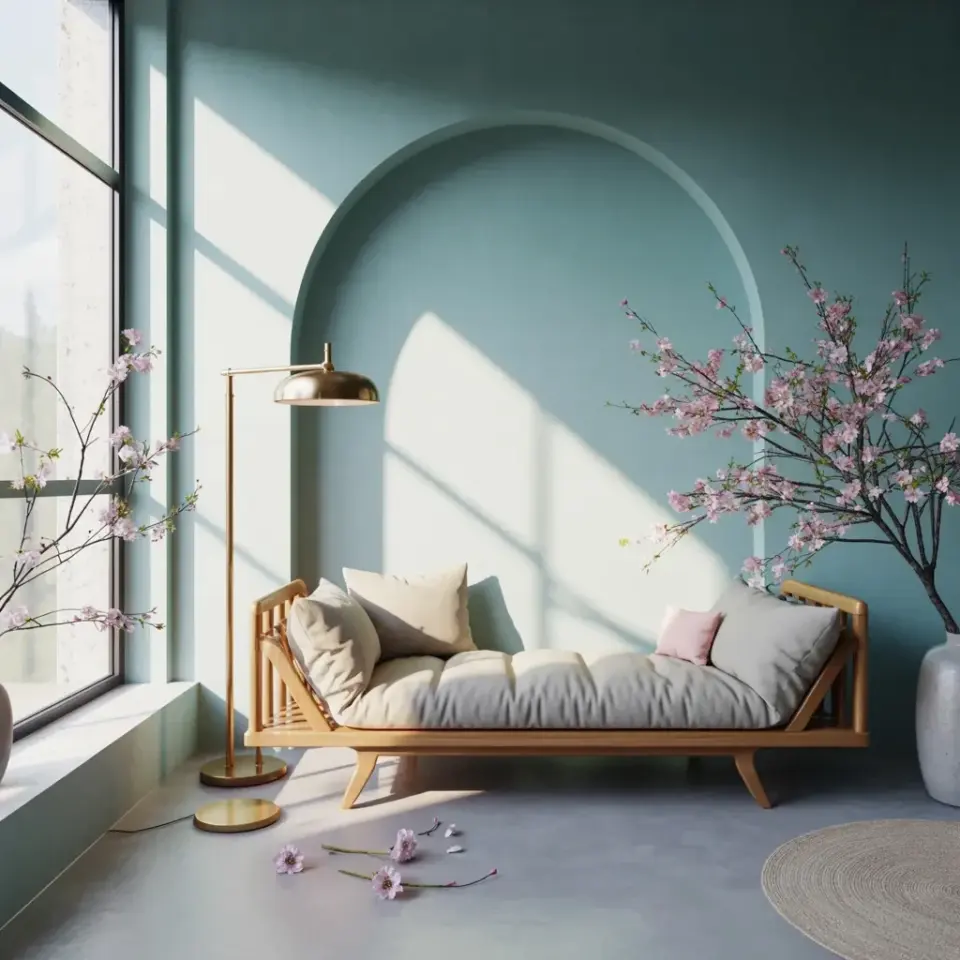
The arched alcove daybed corner in teal is more than a Pinterest fantasy, it’s a seriously achievable project for your own home. I remember the first time I tried to create a cozy reading nook, I overthought everything, bought too many pillows, and ended up with a pile of fabric that looked like a linen explosion. This specific corner works because every single piece has a job to do, and the soft teal wall holds the whole composition together without shouting for attention. Let’s break down exactly how to build this look in your own space, step by step, using the photo as our shared blueprint. Honestly, if you can measure a wall and pick a paint color, you can absolutely pull this off by Sunday afternoon.
## How to Choose the Perfect Soft Teal Wall Color for an Alcove
The teal in this photo is not a bright peacock or a deep ocean hue, it’s a muted, dusty blue-green that feels almost powdery on the eye. Look for paints with a healthy dose of gray in the mix, something that reads calm in morning light and cozy under a lamp at night. I tested three different swatches on my own wall before landing on a similar shade, and the difference between them was surprisingly huge.
Here’s what to look for when you’re at the paint store:
– A soft teal with a cream undertone, not a green undertone, keeps the room from feeling cold.
– Avoid anything labeled “turquoise” unless you want a much more energetic, tropical vibe.
– Matte or eggshell finishes hide imperfections and make the color feel flat and restful.
– Ask for a sample pot and paint a two-foot square directly over your existing wall, live with it for a day.
The trick is to view your swatch at different times, especially late afternoon when the sun hits the window. The shadow play on the teal wall in the photo is a huge part of the mood, and a high-gloss paint would ruin that soft, diffuse effect completely.
## Why a Daybed With Gray Cushions Belongs in a Narrow Corner
A daybed is the perfect solution for a corner that feels too small for a sofa but too empty for a chair. The wooden frame in the photo adds a natural, warm texture that stops the cool teal from feeling sterile. Light gray cushions are the unsung hero here, they reflect the sunlight and create a bright, airy surface to rest your book on.
But here’s the thing about gray cushions, they need to be the right gray. A warm greige would look muddy against the teal, and a cool, slate gray might make the whole nook feel like a rainy day. The photo shows a pale, almost silver-toned gray that works in harmony with the wood and the wall. If you can’t find a daybed that fits your exact space, a simple wooden bench with thick bolsters on the back works just as well.
You want to make sure the daybed is deep enough to sit cross-legged with a cup of tea. I have a specific pet peeve: a nook that looks gorgeous but is physically impossible to lounge in. That one is a real problem in so many design blogs, so measure your available depth against your own height and comfort level before you buy anything.
## The Best Brass Floor Lamp Placement for Warm Evening Light
The brass floor lamp with the round gold base is the quiet workhorse of this whole corner. It provides a warm pool of light that contrasts beautifully with the cool teal wall, and honestly, it makes the space functional after the sun goes down. The placement is key, notice how the lamp sits right next to the daybed, not behind it.
This positioning means the light source is at your shoulder level when you’re sitting, which is the absolute best angle for reading. It creates a light spill over your book and casts a gentle, cozy glow across the alcove without any harsh glare. Look for a lamp with a solid, weighted base because nobody wants to knock their only light source over at midnight. That’s a recipe for a stubbed toe and a cracked shade.
When you’re shopping, pay attention to the lampshade material. A linen or parchment shade does the best job of softening the bulb’s brightness. A metal or glass shade would bounce the light around too harshly, changing the entire feel of the space.
## Styling an Arched Alcove Nook With Fresh Spring Elements
The cherry blossom branches are the secret ingredient, they bring the season inside without asking for any real maintenance. The pink petals are a delicate contrast to the strong teal and the neutral gray, and they add a touch of organic movement. Arranging them in a simple white vase keeps the look clean and lets the branches do the talking.
Here is how I usually arrange stems like this:
– Start with the tallest branch in the middle, it sets the height for everything else.
– Fan the other branches out at angles, like a tree canopy, so the space feels full.
– Rotate the vase occasionally because the branches will naturally reach for the window light.
– Trim the stems about once a week and remove any falling petals quickly, they stain.
You are not limited to cherry blossoms, of course. In the fall, dried grasses look incredible in that same spot. In winter, bare, twisted branches with tiny white lights are absolutely magical. The point is to change the vase with the season so the nook never feels stale.
## How to Arrange Natural Light and Shadows in Your Reading Nook
The large window on the left side is doing more work than you might think. The natural sunlight streaming in casts those soft, irregular shadows on the teal wall, which gives the whole corner a sense of depth and time passing. If you’re lucky enough to have a window nearby, let the light do its thing without blocking it.
But what if your alcove is on an interior wall with no window at all? That’s where you have to fake it. A strategically placed mirror facing a window elsewhere in the room can bounce a surprising amount of light into your new nook. Alternatively, use a dimmer switch on your floor lamp, so you can mimic that soft afternoon glow even in the middle of a dark winter evening.
Here’s the thing: a reading nook can fall flat if the light is either too dim to see by or too bright to relax in. I’ve accidentally created a interrogation corner before, and it’s not the vibe we’re going for here. A sheer curtain on the window helps filter the harsh midday sun into that beautiful, diffused light you see in the photo.
## A Step-by-Step Guide to Styling Your Daybed Corner
Ok so once you have all the components, the assembly order matters. It’s not enough to just throw the pieces in a corner and hope for the best. Here is the exact method I use to pull all of this together without crying.
First, paint the alcove and let it dry completely, usually two coats on top of a primer is best. Second, move the daybed against the back wall, making sure it’s centered in the arch. Next, place your lamp to the side. Check the height, the shade should be roughly between your chin and the top of your head when you’re seated.
Now add the big cushions. Put the base cushion down first, then lean the taller back cushions against the wall. This creates a supportive foundation behind you. Throw pillows should be easy to move, since some days you’ll want them behind your lower back. Finally, bring in the vase. Set it on the floor on the opposite side of the lamp to balance the visual weight.
This might sound obvious, but the cushion arrangement is the difference between a chic daybed and a messy pile of laundry. Take a photo of your setup as soon as you finish, because I’ve found that looking at it through the lens helps you spot imbalances right away. It’s a bit of a cheat code, but it works every single time.
## Final Touches to Make Your Cozy Corner Feel Alive
A floor pillow for guests is a smart, practical addition that many people skip. The nook in the photo doesn’t have one, but if you have kids or pets, it’s a game changer for extra seating. It also provides a soft landing spot for a book that slides off your lap when you get too comfortable. Honestly, I need that floor cushion in my life to protect my books from my own sleepiness.
Consider a tiny side table with a cup holder or a small shelf mounted directly on the wall. The photo shows the floor space is fairly minimal, which is part of its charm, but you still need a designated spot for your coffee mug that doesn’t involve holding it awkwardly the entire time you read. I actually use a simple wooden stool for this, and nothing fancy.
Oh, and one more realistic piece of advice, give the whole area a weekly dusting. Those beautiful cherry blossom petals will fall, the sun will bleach part of the lamp, and the cushions will need a good vacuum around the seams. It’s a living corner, not a museum exhibit.
## Build Your Own Teal Sanctuary
The beauty of this design is that it doesn’t rely on rare vintage finds or a massive budget, it relies on a strong paint color and a cohesive layout. The softened walls, the warm brass glow, the comfortable cotton layers, that is the whole recipe. Start with the paint because the color drives everything else in the space. Then add one piece at a time, live in the nook, and adjust what feels wrong.
I hope this gives you the confidence to tackle that awkward empty corner in your own living room. Save this guide for when you’re ready to start, and honestly, send me a photo of your finished nook, I love seeing how these ideas transform in real homes. Take your time with the paint selection and the rest will follow. 🌿
#ArchedAlcove #DaybedCorner #TealWall #CozyReadingNook #SpringVibes
Leave a Comment