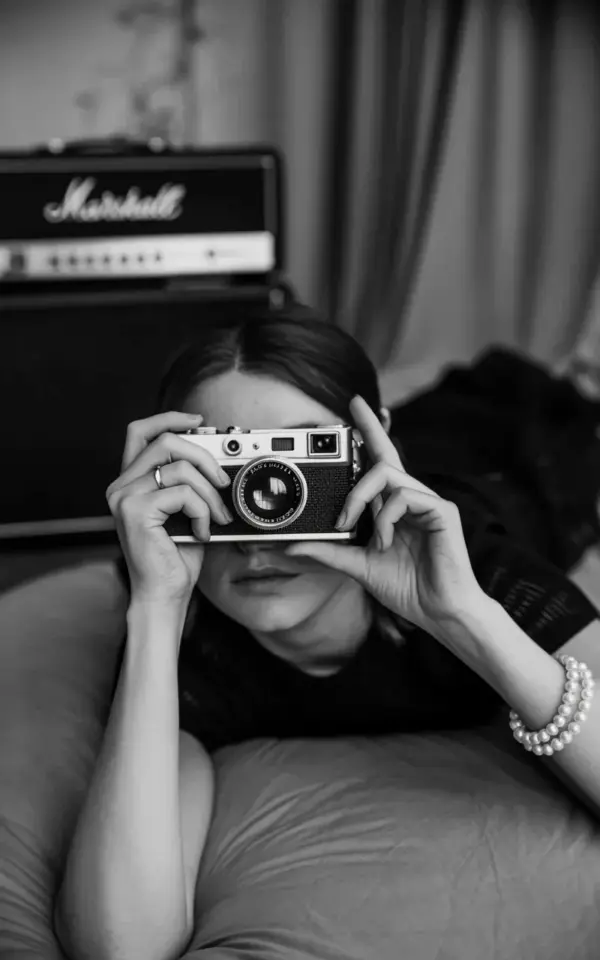
There’s a moment in the late afternoon when the light goes grey and soft, and I start thinking about shooting film. This winter, I keep circling back to one specific aesthetic: the vintage mirror selfie. The image that started it all is simple. Black and white, a Leica camera held up to the face, a pearl bracelet catching the light, and a Marshall amp lurking in the background. It feels like a film still, moody and deeply artistic. I saved it to my photography moodboard, and honestly, I haven’t stopped thinking about it.
Why the Vintage Mirror Selfie Is Everywhere Right Now
Look, the mirror selfie isn’t new. But the vintage mirror selfie, the kind that looks like it was pulled from someone’s film folder from 1972, has a totally different energy. It’s not about flaunting a filter. It’s about capturing a moment of quiet self-confrontation. The mirror becomes a stage, the camera a mask, and the room around you fades into deep shadow.
Part of the appeal is the season. It’s January, or maybe the last week of December, and everyone is craving that slow, warm feeling. We stay inside more, which means our photography backgrounds become our bedrooms and living rooms. That’s why a photo like this feels so perfect. It turns an ordinary room into something cinematic without moving any furniture.
The Leica Camera Factor, or Why the Camera Itself Steals the Scene
A Leica isn’t just a camera, it’s a little black sculpture that happens to take gorgeous photos. In a mirror selfie, it does double duty. It covers part of your face, which adds mystery. It also gives your hands something to do that isn’t just a peace sign. There’s a kind of confidence that comes from holding a beautiful piece of equipment, and it shows in your posture.
I remember trying to recreate this with my phone once. The result was a sad photo of me fumbling with a cracked iPhone case. It really didn’t have the same energy. Not that you need a real Leica. But if you have an old camera that still resembles something from the 80s, dust it off, even if the film advance lever is broken. Your mirror will thank you.
Black and White Photography Lesson: Less Color, More Texture
Black and white photography forces you to look at shapes instead of colors. That’s why this aesthetic works so well with a moody atmosphere. In the photo, the dark top disappears into the shadows. The pearl bracelet becomes a tiny glowing dot. The Marshall amp is just a block of darkness, but it feels like a character standing in the corner, watching.
Here’s a practical tip for your own attempts. When you’re setting up a black and white shot, look for contrast in tone, not color. A white shirt against a dark wall works. A grey sweater on a grey bed doesn’t. Check your viewfinder, or your phone screen, to see the scene in monochrome first. That’s the trick.
- a pearl bracelet or a single strand of pearls
- an old leather jacket with scuffs and a worn collar
- a guitar amp, especially one with a logo that catches the window light
- an open curtain with grey winter light spilling in
- a cracked mirror, honestly, a flaw makes it better
How to Build a Moody Film Photography Aesthetic in Your Own Home
A moody film aesthetic is less about gear and more about atmosphere. Start with the light. A dim, overcast day is perfect. Place a mirror near a window but not facing it directly. You want softened light that falls across your face, not a harsh glow that kills the shadows. Then add one or two props that feel personal to you.
For me, it’s a cluttered bookshelf in the background and my grandmother’s ring. For the photo we’re describing, it’s a pearl bracelet and a Marshall amp. The trick is to avoid doing too much. A single prop can tell a story. Two props create a tiny world. Any more and you’re just showing off. I once tried a full setup with a guitar,
Leave a Comment